

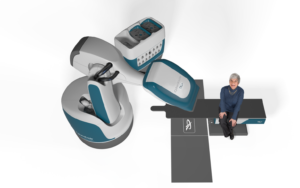
One of the first questions potential patients ask the cancer experts at the CyberKnife Center of Miami – a premiere state-of-the-art cancer treatment center in South Florida – when they walk through our door or call us for information is whether CyberKnife, a noninvasive, pain-free form of radiation therapy, is right for them.
While that may seem like a simple question, the answer is not simple at all. It depends on the type of cancer, the stage, your general health and much more. The good news is that our experts, including Dr. Mark Pomper, board-certified radiation oncologist and medical director of CyberKnife Miami, have been in the business of fighting cancer for more than three decades, and they can help you determine the right treatment and whether that includes CyberKnife.
CyberKnife: Ideal Candidates
There is no one-size-fits all way to treat cancer. Two patients with the same cancer may require different treatments and respond to different interventions. So, the ideal CyberKnife candidate ranges.
However, here is an overview of what CyberKnife does and the types of cancer it treats.
CyberKnife uses a technology called image guided linear accelerator to deliver precision stereotactic body radiation therapy (SBRT) with a robotic arm directly to a tumor, minimizing harm to healthy surrounding tissue and nearby vital organs.
“CyberKnife’s accuracy is sub-millimetric, which can help significantly reduce the risk of the side effects that too often disrupt the lives of patients during and after treatment,” according to Accuray, the maker of the CyberKnife System.
CyberKnife treats cancerous and non-cancerous tumors and other conditions including nerve disorders like trigeminal neuralgia. Basically anywhere where radiation therapy is prescribed or recommended. It’s used for cancers of the brain, lung, prostate, spine, head and neck, liver, kidney and pancreas. It is also an alternative to surgery for patients who don’t want or may not be surgical candidates, or who may have complex tumors that cannot be surgically removed.
And for each type of cancer, treatment is completed in many fewer visits than with traditional radiation.
Other great benefits: CyberKnife also has a lower risk of damage to healthy surrounding tissue, produces excellent tumor control, and a big bonus, while CyberKnife therapy itself doesn’t directly “boost” immunity in the traditional sense, research suggests it may indirectly stimulate the immune system by triggering an anti-tumor response when targeting cancerous cells, potentially allowing the body to better fight cancer in the body; essentially, “waking up” the immune system to recognize and attack cancer cells more effectively.
Now let’s look closer at the types of cancer CyberKnife treats.
- For Brain Cancer: CyberKnife can minimize the risk of potential long-term side effects because of its pinpoint accuracy.
- The robotic arm directs radiation from many angles, concentrating the high dose on the tumor while limiting exposure to nearby healthy tissue and critical structures, such as areas controlling vision, hearing, or motor function.
- Because radiation is focused rather than delivered across the whole brain, patients face a lower risk of memory, concentration, and cognitive issues, as well as widespread fatigue.
- Patients who have been treated with whole-brain radiotherapy can be treated again with CyberKnife.
- Lung Cancer patients benefit because lung tumors shift with every breath. CyberKnife tracks this movement continuously and adjusts the beam automatically, allowing doctors to treat smaller margins around the tumor and protect healthy lung tissue.
- Sparing nearby structures: Multi-angle robotic targeting helps limit radiation exposure to sensitive areas such as the heart, airways, chest wall, and spinal cord.
- Preservation of lung function: Because less healthy lung tissue is irradiated, patients generally experience less decline in breathing capacity compared to conventional radiotherapy or lung surgery.
- Non-surgical outpatient care: Treatment does not require incisions, general anesthesia, or hospital stays, avoiding surgical recovery risks and letting most patients keep up normal daily activities.
- Shorter course: Lung treatment is often completed in about 1-to-5 sessions rather than 20-to-30 sessions of conventional radiation.
- Short-term side effects may include: Fatigue, mild cough, shortness of breath, or soreness near the chest wall or airways depending on tumor location.
“The system provides a proven, non-surgical option for treating early stage, inoperable non-small cell lung cancer, tumors in challenging anatomical locations such as central lung tumors surrounded by sensitive structures and lung tumors near the chest wall, and inoperable peripheral lung tumors,” says Accuray, the maker of CyberKnife.
- Liver Cancer patients may benefit from CyberKnife if their tumors cannot be completely removed with surgery or if they cannot undergo surgery. Plus, CyberKnife is used as patients wait for a transplant.
- Because the liver moves as you breathe, the robotic system tracks and adjusts for tumor movement continuously so healthy liver tissue and nearby organs—like the bowel, stomach, and ribs—receive less radiation.
- Preservation of healthy liver: Sparing normal liver cells helps protect overall liver function and lowers the risk of radiation-induced liver injury.
- Non-surgical, outpatient care: There are no surgical incisions, general anesthesia, or hospital stays, avoiding surgical recovery risks such as bleeding or longer downtime.
- Short treatment course: Treatment typically takes 1 to 5 sessions over 1 to 2 weeks, rather than several weeks of daily conventional radiation.
- Pancreatic Cancer patients with locally advanced cancer or inoperable cancers could be good CyberKnife candidates as well. It can also be used in tandem with other treatments like surgery and chemotherapy.
- Real-time motion tracking: The pancreas also shifts with breathing and digestion. CyberKnife tracks tumor movement so beams stay aligned with the target rather than requiring wide safety margins that expose adjacent organs.
- Sparing nearby organs: Tighter beam targeting helps limit radiation to sensitive neighboring structures like the stomach, duodenum, and bowel.
- Fewer treatment visits: Treatment is commonly completed in up to five outpatient sessions, reducing daily clinic fatigue and avoiding long interruptions to chemotherapy schedules.
- Prostate Cancer patients see fewer side effect with CyberKnife than traditional treatments. Plus, the success rate can be 95% or higher, especially for early-stage prostate cancers.
- Its real-time motion tracking, which helps limit radiation to nearby healthy tissue lowers the risk of urinary, bowel, and sexual side effects.
- The prostate also shifts naturally due to breathing, bladder filling, or bowel gas. CyberKnife tracks movement continuously and adjusts, reducing the need for wide safety margins around the gland.
- The robotic arm delivers focused radiation from many angles, helping spare adjacent structures like the bladder wall, rectum, and nearby nerves.
- Non-invasive, shorter schedule: Treatment typically takes 5 outpatient sessions over 10 days instead of 40 treatment over several months with other types of radiation.
- Spinal Cancer patients benefit from CyberKnife’s precision and sub-millimeter accuracy: Robotic positioning and real-time imaging target the tumor from many angles, limiting radiation to the spinal cord, nerves, and nearby organs.
- Motion tracking: The system tracks subtle movements during treatment and adjusts the beam, helping protect adjacent healthy tissue.
- Non-surgical outpatient care: No incisions, general anesthesia, or hospital stays are required, avoiding surgical complications and long recovery periods.
CyberKnife Treatment: Miami, FL
The CyberKnife experts at CyberKnife Miami see CyberKnife’s many advantages every single day. Due to our vast experience we can treat the toughest cases and also patients who have been turned away from other centers.
If you would like to find out more about treatment with CyberKnife call us at 305-279-2900 or go to our website now for more information. We’re here to help you – whether you have questions, come in for an initial consultation or a second opinion.